

Synthetic Cathinone Research
3-Methylmethcathinone Research Chemical: 3-MMC Chemistry, Analysis and Europe
Sep
3-methylmethcathinone research chemical is an increasingly searched topic within analytical chemistry, forensic science, toxicology and European drug-monitoring research.
Better known as 3-MMC, 3-methylmethcathinone is a synthetic cathinone that has been investigated for its chemical structure, pharmacological properties, metabolism and toxicological profile.
For readers researching 3-MMC Powder, laboratory analysis or European regulation, it is important to separate peer-reviewed scientific evidence from commercial descriptions. This guide provides a research-focused overview of the compound, including its chemistry, analytical identification, metabolism, toxicology and regulatory background.
Research and legal notice: 3MMC is a controlled psychoactive substance in multiple jurisdictions. This article is intended for scientific and educational purposes and does not provide instructions for human use, dosing, procurement or avoidance of drug-control laws.
What is 3-methylmethcathinone Research Chemical?
3-methylmethcathinone, abbreviated 3MMC, is a synthetic cathinone belonging to a broader family of substituted cathinones.
Its chemical name is:
2-(methylamino)-1-(3-methylphenyl)propan-1-one
The compound contains a methyl group at the 3-position of its aromatic ring. This structural position distinguishes it from related positional isomers such as 2-MMC and 4-MMC.
The European Union Drugs Agency identifies 3MMC as a synthetic cathinone and has monitored it through the European early-warning system for new psychoactive substances.
Understanding the chemistry
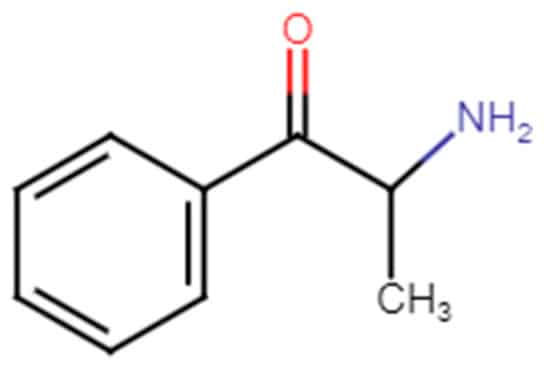
The molecular structure of 3-methylmethcathinone is important when comparing it with other compounds in the cathinone family.
The most commonly discussed related substances include:
- 2-MMC;
- 3-MMC;
- 4-MMC, also known as mephedrone;
- methcathinone;
- other substituted synthetic cathinones.
Although these compounds can share a common chemical framework, differences in the position or identity of substituents can produce different analytical and pharmacological characteristics.
For laboratories, this means each compound needs to be identified individually rather than assumed to be chemically interchangeable with another cathinone.
Why is 3-MMC research important?
Interest in this research chemical extends across several disciplines.
Analytical chemistry
Researchers develop techniques that can identify 3MMC and distinguish it from structurally similar cathinones.
Pharmacology
Laboratory investigations examine interactions with monoamine transporters and related biological systems.
Toxicology
Medical and forensic scientists examine reported adverse effects and exposure cases.
Metabolism
Researchers investigate how the molecule is transformed into other compounds in biological systems.
European monitoring
Government agencies monitor changes in the availability and appearance of synthetic cathinones.
The EUDA describes synthetic cathinones as one of the largest groups of new psychoactive substances monitored in Europe.
3-MMC and related cathinones
One of the most common sources of confusion is the similarity between the names of different cathinones.
The distinction can be shown simply:
| Compound | Common identification | Substituent position |
|---|---|---|
| 2-MMC | 2-methylmethcathinone | 2-position |
| 3-MMC | 3-methylmethcathinone | 3-position |
| 4-MMC | Mephedrone | 4-position |
The change in position may appear small, but it is chemically significant.
Researchers investigating 3MMC chemistry therefore need analytical methods capable of distinguishing one positional isomer from another.
How is 3-MMC identified in a laboratory?
A major component of 3-MMC research involves chemical identification.
Several analytical methods can be used depending on the sample and research question.
Liquid chromatography
Liquid chromatography separates chemical components within a sample before detection.
It is frequently combined with mass spectrometry for more specific identification.
LC-MS and LC-MS/MS
Liquid chromatography coupled with mass spectrometry can provide information about molecular mass and characteristic fragmentation.
These techniques are widely used in forensic and toxicological analysis.
High-resolution mass spectrometry
High-resolution systems allow researchers to examine accurate mass information and investigate unknown compounds or metabolites.
Gas chromatography-mass spectrometry
GC-MS can also be used when the physical and chemical properties of the target compound make it appropriate.
Using complementary analytical techniques can increase confidence in a laboratory identification.
Why analytical identification matters
The physical appearance of a sample is not enough to establish its chemical identity.
Laboratory analysis can help determine:
- which compound is present;
- whether multiple compounds are present;
- the concentration;
- whether metabolites are detectable;
- whether a result is consistent with the proposed chemical identity.
This becomes particularly important when analysing synthetic cathinones because several compounds can have similar names and closely related molecular structures.
3-MMC metabolism
Another important area of 3-MMC research is metabolism.
When a chemical enters a biological system, it can undergo enzymatic transformation. The resulting compounds are known as metabolites.
A 2024 study examined the biotransformation of 3MMC using human liver microsomes and cytosol, applying both targeted and non-targeted analytical approaches. The researchers identified several metabolic pathways relevant to toxicological testing.
Studying these pathways helps forensic and clinical laboratories understand what may remain detectable in biological samples after exposure.
Why metabolites are important
Testing for the parent compound is not always sufficient.
As metabolism occurs, concentrations of the original molecule can decline while metabolic products remain present.
This is why modern toxicology may investigate:
Parent compound
Phase I metabolites
Phase II metabolites
Potential biomarkers
Understanding the metabolic profile can improve analytical sensitivity and provide a more complete picture of exposure.
3-MMC in biological samples
Research has investigated detection of this compound in biological material using sophisticated analytical methods.
Depending on the purpose of an investigation, researchers may analyse:
Blood
Blood testing can provide information about substances present in the circulating system.
Urine
Urine analysis is often useful for investigating metabolites and identifying previous exposure.
Hair
Hair provides a different analytical matrix and can be used in some forensic investigations.
The interpretation of results from these different matrices requires specialist toxicological knowledge because concentration does not automatically translate into a specific clinical outcome.
What does toxicology research say?
Scientific evidence does not support describing 3-MMC as a substance with an established safety profile.
A Dutch toxicology study examined 184 reported 3-MMC poisoning cases handled by the Dutch Poisons Information Center between 2013 and the first half of 2021. Reported findings included tachycardia, hypertension, agitation and other sympathomimetic effects. Severe effects were also documented.
Other forensic reports have described severe impairment of consciousness and co-exposure with other psychoactive substances.
These findings are relevant when evaluating online claims about the compound.
Scientific content should distinguish documented observations from assumptions about how a substance might affect an individual.
3-MMC and pharmacology
The pharmacology of synthetic cathinones is an important subject of scientific research.
Studies of 3-MMC have examined its effects on monoamine systems, including dopamine, norepinephrine and serotonin pathways.
A review of the available literature discusses the biological and toxicological characteristics of 3-MMC and other substituted cathinones while also highlighting limitations in the available evidence.
This distinction is important because laboratory findings do not necessarily predict identical responses in every human being.
3-MMC and Europe
3-MMC became an important subject within Europe’s new psychoactive substance monitoring system.
The EUDA reports that 3-MMC was formally monitored through the European early-warning system from 2012 onward. The substance subsequently became the subject of a formal European risk assessment.
Following that assessment, the European Commission adopted measures bringing 3-MMC under EU drug-control measures.
The Commission reported that 3-MMC had been detected across numerous European countries and had re-emerged significantly in the European market.
European regulation of 3-MMC
The regulatory situation is a central part of any serious article about 3-MMC Europe.
Commission Delegated Directive (EU) 2022/1326 added 3-MMC to the relevant European controlled-drug framework following the scientific risk assessment.
Individual Member States then apply national measures through their own legal systems.
As a result, websites should avoid broad statements such as:
“3-MMC is legal in Europe.”
Europe does not operate as a single national controlled-substance jurisdiction.
The appropriate approach is to verify the current rules for the specific country concerned.
Why older 3-MMC information can be misleading
Search results for synthetic cathinones often contain articles written years ago.
A page may accurately describe the situation at the time it was published while being incorrect today.
This is particularly relevant to:
- legal status;
- product availability;
- national drug schedules;
- laboratory detection;
- market trends.
A responsible 3-methylmethcathinone research chemical article should therefore show publication or update dates and link to current official sources.
What should researchers look for when evaluating 3-MMC information?
A useful source should provide more than promotional language.
Chemical identity
The precise name, relevant identifiers and scientific terminology should be clear.
Analytical evidence
Where relevant, laboratory methods and supporting analytical documentation should be identified.
Scientific references
Major claims should be supported by peer-reviewed studies, recognized scientific databases or government publications.
Regulatory information
The current law should be distinguished from historical classifications.
Transparency
Any product or supplier information should clearly separate factual information from promotional statements.
These principles are especially valuable when researching emerging psychoactive compounds.
3-MMC Powder and product information
SpaceChems currently lists 3MMC Powder within its Cathinone research-chemical section, alongside other 3-MMC-related product pages.
For a research-oriented website, the most useful product information should focus on verifiable details such as:
- chemical identity;
- product form;
- batch information;
- analytical documentation where available;
- storage information;
- applicable restrictions;
- research-only labeling;
- links to relevant scientific information.
This approach makes product pages more transparent and complements educational content.
How SpaceChems can build topical authority around 3-MMC
A strong SEO structure can connect the article to several relevant pages on your site.
For example:
3-MMC research → educational article
3MMC Powder → relevant SpaceChems product page
Cathinone research chemicals → cathinone category
Quality Control → quality-control information
About SpaceChems → company information
Disclaimer → legal and research-use information
Internal links should be placed where they genuinely help the reader rather than repeated throughout every paragraph.
Frequently asked questions about 3-MMC
What is 3-methylmethcathinone?
3-methylmethcathinone is the chemical name for 3-MMC, a synthetic cathinone monitored by European drug authorities.
How is 3-MMC different from 4-MMC?
3-MMC and 4-MMC are positional isomers with the methyl group located at different positions on the aromatic ring.
Is 3-MMC scientifically studied?
Yes. Research has investigated its chemistry, pharmacology, metabolism, toxicology and European regulatory status.
How can laboratories detect 3-MMC?
Chromatographic and mass-spectrometric methods can be used to identify and quantify the compound and, where appropriate, its metabolites.
Are there studies of 3-MMC metabolism?
Yes. Human liver models and analytical studies have been used to investigate its metabolic pathways.
Does 3-MMC have known risks?
Published toxicology reports have documented adverse effects and serious poisoning cases.
Is 3-MMC controlled in Europe?
Yes. EU-level control measures were introduced following a formal European risk assessment.
Can the legal status differ between European countries?
Yes. EU-level measures are implemented through national legislation, so the applicable rules should be checked for the specific country.
Conclusion
3-methylmethcathinone research chemical is an important topic within the scientific study of synthetic cathinones.
The available literature covers its chemical structure, pharmacology, metabolism, analytical detection and toxicology. Research has also helped laboratories understand which metabolites can be relevant when testing biological samples.
At the European level, the compound has been monitored for many years and is now subject to EU control measures following a formal risk assessment.
For anyone researching 3-MMC Europe, accuracy is more valuable than exaggerated claims. Reliable chemical identifiers, peer-reviewed research, transparent analytical documentation and current regulatory information provide a stronger basis for understanding the compound.
SpaceChems can strengthen this topic further by connecting its 3MMC Powder page with high-quality educational content, quality-control information and current regulatory references. This creates a more coherent information architecture and gives readers multiple ways to explore relevant scientific information.
