

Arylcyclohexylamine Research
Deschloro-N-Ethyl-Ketamine (O-PCE): Chemistry, Research and U.S. Regulatory Considerations
Sep
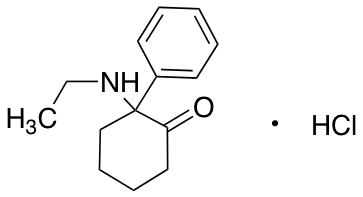
Deschloro-N-ethyl-ketamine, commonly known as O-PCE, 2-oxo-PCE, or N-ethyldeschloroketamine, is a synthetic arylcyclohexylamine that has attracted attention in analytical chemistry, toxicology and forensic science.
As interest in emerging psychoactive compounds continues to grow, researchers need reliable information about the identity, chemistry, metabolism and detection of compounds such as OPCE. This is particularly relevant in the United States, where federal and state laws can apply differently to emerging substances.
This guide examines the scientific literature surrounding deschloro-N-ethyl-ketamine, explains how OPCE is identified in laboratories, reviews what research has reported about its metabolism and toxicology, and discusses why U.S. regulatory status requires careful verification.
Research and legal notice: OPCE is a psychoactive substance associated with documented intoxication cases. This article is intended for scientific and educational purposes and is not instructions for use, purchasing advice, or legal advice.
What is deschloro-N-ethyl-ketamine?
Deschloro-N-ethyl-ketamine is a synthetic compound in the arylcyclohexylamine family.
It is commonly referred to as:
- OPCE
- 2-oxo-PCE
- N-ethyldeschloroketamine
- deschloro-N-ethyl-ketamine
- eticyclidone
The U.S. Food and Drug Administration’s Substance Registration System records 2′-oxo-PCE and lists OPCE, deschloro-N-ethyl-ketamine, N-ethyldeschloroketamine and eticyclidone among its synonyms. The FDA record identifies the molecular formula as C14H19NO; importantly, inclusion in the database does not represent FDA approval or regulatory authorization.
O-PCE and the arylcyclohexylamine family
Arylcyclohexylamines are a chemical family containing compounds with related structural features.
Ketamine and phencyclidine are well-known members of this broader group, while OPCE represents a different synthetic compound within the family.
The relationship between these compounds is primarily a matter of chemical structure, and structural similarity should not be interpreted as proof that two substances have identical effects, safety profiles or legal status.
For analytical laboratories, distinguishing structurally related substances is particularly important because different compounds can produce overlapping analytical signals or metabolites.
Why is O-PCE being studied?
Scientific interest in OPCE has developed around several areas of research.
Analytical chemistry
Researchers need reliable methods for distinguishing OPCE from related arylcyclohexylamines.
Toxicology
OPCE has appeared in clinical and forensic toxicology investigations involving acute intoxication.
Metabolism
Understanding metabolites helps laboratories detect previous exposure even when the original compound is no longer present in a biological sample.
Forensic science
Specialised testing can help identify OPCE in urine, blood, hair and seized materials.
Drug monitoring
Emerging substances require continually updated analytical databases and screening methods.
These areas make OPCE a useful example of the challenges associated with identifying newer psychoactive compounds.
How is O-PCE identified in a laboratory?
Identifying a compound such as deschloro-N-ethyl-ketamine generally requires more than a basic screening test.
Laboratories may use complementary analytical techniques.
Liquid chromatography
Liquid chromatography separates compounds in a sample before additional analysis.
When combined with mass spectrometry, LC-MS can provide information that helps distinguish OPCE from chemically related substances.
High-resolution mass spectrometry
High-resolution mass spectrometry can provide highly accurate mass information and is particularly useful for investigating unknown substances and metabolites.
Researchers have used liquid chromatography coupled with high-resolution mass spectrometry to investigate OPCE metabolism and identify potential biomarkers.
Gas chromatography-mass spectrometry
GC-MS is another important analytical approach used in forensic and toxicological chemistry.
Nuclear magnetic resonance
NMR can provide information about molecular structure and can complement chromatographic and mass-spectrometric approaches.
Using more than one analytical technique can provide stronger evidence for compound identification.
O-PCE metabolism
One of the most important scientific questions surrounding OPCE is how the human body transforms the compound.
When a substance undergoes metabolic processing, the original molecule may be converted into other compounds known as metabolites.
A published study examined OPCE using human liver microsomes together with urine and hair samples. Researchers identified a total of 15 metabolites, including compounds detected both in laboratory experiments and biological specimens.
The study is particularly relevant to forensic toxicology because the parent OPCE molecule may disappear from urine while several metabolites remain detectable.
This means that a sophisticated laboratory test may need to search for specific metabolites rather than relying exclusively on the parent compound.
What metabolites have been reported?
Research into OPCE has identified multiple metabolic products.
Among the metabolites investigated are:
- 2-en-PCA-N-Glu;
- O-PCA-N-Glu;
- OH-O-PCE;
- OH-PCE;
- OH-PCA;
- additional phase-I and phase-II metabolites.
The researchers suggested that some of these compounds could be useful as target biomarkers for improving the detection window in urine.
This illustrates an important principle in modern toxicology: detecting exposure can involve identifying the metabolic footprint of a substance rather than simply looking for the original chemical.
O-PCE in blood, urine and hair
Different biological matrices provide different information.
Urine
Urine testing can be useful for identifying drug metabolites, but the parent compound may no longer be detectable after metabolism.
Blood
Blood analysis can provide information about compounds present within the circulating system and can be useful in toxicokinetic research.
Hair
Hair provides a different testing matrix and may be useful when researchers are investigating longer-term exposure histories.
A human case study used urine, hair and plasma together with advanced mass-spectrometry techniques to investigate OPCE exposure and metabolism. The study identified numerous metabolites and reported an estimated plasma elimination half-life of approximately five hours in that specific case.
A single case cannot establish a universal pharmacokinetic value for all people, but it demonstrates how detailed analytical studies can help identify metabolic biomarkers.
What does toxicology research say about O-PCE?
The existing literature contains important safety information.
A published report described 56 acute poisoning cases involving 2-oxo-PCE, another name for OPCE. Clinical findings included impaired consciousness, confusion, abnormal behaviour, hypertension and tachycardia. Convulsions were also reported, and some patients required intensive care.
More recent research from the French Addictovigilance Network included OPCE among emerging ketamine analogues investigated in clinical and forensic records. The study reported neurological and psychiatric adverse effects, including dissociation and impaired consciousness, and identified serious cases among the overall group of ketamine-analogue exposures.
These findings demonstrate why OPCE should not be described as a compound with an established safety profile.
Why O-PCE can be difficult to detect
There are several analytical challenges associated with emerging psychoactive substances.
Structural similarity
Closely related arylcyclohexylamines can have similar chemical features.
New metabolites
A newly encountered substance may produce metabolites that are not yet included in standard laboratory libraries.
Limited reference material
Laboratories can face difficulties when authentic reference standards are unavailable.
Parent compound disappearance
A substance can become difficult to identify after extensive metabolism, while metabolites remain detectable.
The development of validated analytical methods therefore plays an important role in clinical and forensic toxicology.
O-PCE and research chemical terminology
Search engines and scientific databases may use several terms for the same substance.
For OPCE, researchers may encounter:
O-PCE
2-oxo-PCE
deschloro-N-ethyl-ketamine
N-ethyldeschloroketamine
eticyclidone
Including these established synonyms in an educational article can improve clarity and help readers locate scientific literature across different databases.
O-PCE and the United States
The U.S. regulatory environment requires particular caution.
The federal Controlled Substances Act establishes five schedules for controlled substances, but U.S. law also contains a mechanism concerning controlled-substance analogues. The DEA explains that a substance does not necessarily need to appear by name in the controlled-substance schedules to create potential criminal-law issues where the federal analogue provisions apply. The relevant federal provisions focus, among other things, on substantial structural or pharmacological similarity and intended human consumption.
Accordingly, it would be inaccurate for a website simply to state that OPCE is “legal in the USA” without a detailed legal analysis.
The FDA’s substance database provides a scientific identity record for 2′-oxo-PCE, but that record explicitly states that inclusion does not imply regulatory review or approval.
Federal law is not the whole picture
Another important consideration is that state laws can differ from federal law.
Some U.S. states have enacted specific controls covering individual arylcyclohexylamines, while others can use broader analogue or structural provisions.
For example, state controlled-substance schedules can contain detailed entries for structurally related arylcyclohexylamines.
Therefore, anyone researching the legal status of OPCE in the United States should check:
- current federal law;
- the law of the relevant state;
- applicable controlled-substance analogue provisions;
- import and customs requirements;
- rules governing research chemicals and laboratory materials.
What makes a good O-PCE research reference?
For researchers and technically minded readers, a useful information source should distinguish between:
Chemical identity — what the compound is.
Analytical evidence — how it has been identified.
Metabolism — which metabolites have been observed.
Toxicology — what clinical and forensic research has reported.
Regulation — what current law actually says.
This separation prevents scientific descriptions from being confused with legal conclusions or marketing claims.
SpaceChems and O-PCE research information
SpaceChems currently presents O-PCE under its Arylcyclohexylamine research-chemical category. Its website also provides dedicated pages for product information, quality control, disclaimers, company information and contact details.
For an information-first content strategy, visitors should be directed from this article to relevant pages that explain the product category, analytical information, quality-control practices and the site’s research-chemical policies.
This approach gives readers a clearer path from scientific education → product information → company information, without making unsupported claims about safety or legality.
Frequently asked questions about deschloro-N-ethyl-ketamine
What is deschloro-N-ethyl-ketamine?
Deschloro-N-ethyl-ketamine is another name for OPCE, a synthetic arylcyclohexylamine also known as 2-oxo-PCE or N-ethyldeschloroketamine.
Is O-PCE the same as ketamine?
No. OPCE and ketamine are different chemical compounds, although they belong to related chemical families.
What is 2-oxo-PCE?
2-oxo-PCE is a commonly used alternative name for OPCE or deschloro-N-ethyl-ketamine.
How is OPCE detected?
Researchers have used methods including liquid chromatography-high-resolution mass spectrometry, gas chromatography-mass spectrometry and nuclear magnetic resonance to investigate OPCE and its metabolites.
Can OPCE metabolites be detected?
Yes. Research has identified multiple metabolites in experimental systems and biological specimens, including urine and hair.
Is OPCE approved by the FDA?
The FDA Substance Registration System contains an identity record for 2′-oxo-PCE, but the database explicitly states that a UNII entry does not imply regulatory review or approval.
Is OPCE legal in the United States?
Its legal status should not be reduced to a simple yes/no statement. Federal controlled-substance analogue provisions and differing state laws can be relevant, so current federal and state requirements should be reviewed for the specific circumstances.
Conclusion
Deschloro-N-ethyl-ketamine (OPCE) is an arylcyclohexylamine that has received increasing attention in analytical chemistry and toxicology.
Scientific studies have investigated its molecular identity, metabolites, toxicokinetics and detection in biological samples. Modern techniques such as high-resolution mass spectrometry have made it possible to identify a much broader metabolic profile than would be possible by looking only for the parent compound.
Toxicology reports also document serious adverse outcomes associated with OPCE exposure, making accurate scientific communication particularly important.
For readers in the United States, regulatory questions require additional caution because federal analogue provisions and state-specific controlled-substance laws may affect how a compound is treated.
The most reliable way to research OPCE is to combine scientific literature, official chemical databases and current federal and state legal sources.
