

Synthetic Cannabinoid Research
JWH-210 Research Chemical: Chemistry, Analysis and European Research
Sep
JWH-210 research chemical is a term increasingly encountered in scientific, analytical and forensic discussions involving synthetic cannabinoids.
JWH-210 is a synthetic cannabinoid belonging to the naphthoylindole family. It has been investigated in receptor-binding studies, toxicology research and analytical chemistry, while European monitoring agencies have documented its presence in the market for new psychoactive substances.
For researchers and readers looking for accurate information about JWH-210 in Europe, understanding its chemical identity, laboratory analysis, pharmacological research and regulatory status is considerably more useful than relying on unsupported product descriptions.
This guide examines what is currently known about JWH-210 and explains why analytical quality, documentation and regulatory verification are important when researching this compound.
Research and legal notice: JWH-210 is a psychoactive synthetic cannabinoid associated with documented adverse effects and controlled-substance laws in some jurisdictions. This article is for scientific and educational purposes only and is not instructions for use, dosing, or purchasing advice.
What is JWH-210?
JWH-210 is a synthetic cannabinoid in the naphthoylindole class.
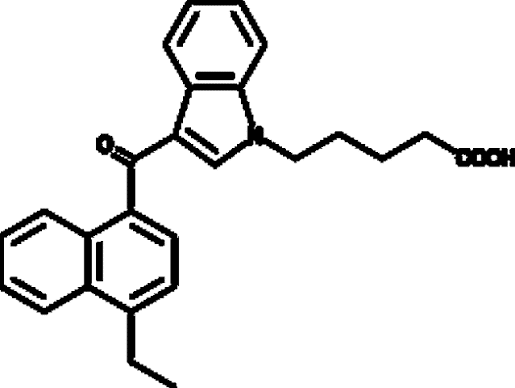
PubChem identifies the compound as (4-ethyl-1-naphthalenyl)(1-pentyl-1H-indol-3-yl)methanone, with the molecular formula C26H27NO and molecular weight approximately 369.5 g/mol. PubChem also lists CAS number 824959-81-1.
The structure contains an indole-based component connected to a substituted naphthalene group through a methanone bridge. This structural arrangement distinguishes JWH-210 from other members of the JWH series.
For laboratory work, using the precise chemical identity is important because many synthetic cannabinoids have very similar names and structures.
JWH-210 and the synthetic cannabinoid family
Synthetic cannabinoids are a broad group of compounds designed to interact with cannabinoid receptors.
The European Union Drugs Agency explains that synthetic cannabinoids act on cannabinoid receptors in the body and that the group includes a very diverse range of chemical structures.
JWH-210 belongs specifically to the naphthoylindole subgroup.
Other compounds in the wider JWH family include:
- JWH-018;
- JWH-073;
- JWH-081;
- JWH-122;
- JWH-250;
- JWH-251.
The structural differences between these compounds can affect their receptor activity, metabolism and analytical characteristics, which is why individual identification is important.
Why is JWH-210 studied?
There are several reasons researchers continue to investigate JWH210.
Chemical research
Its molecular structure makes it relevant to studies of synthetic cannabinoid structure-activity relationships.
Receptor research
Laboratory studies have examined its interaction with the CB1 and CB2 cannabinoid receptors.
Toxicology
JWH210 has appeared in clinical and forensic investigations involving adverse effects and intoxication.
Analytical chemistry
Laboratories need validated techniques capable of distinguishing JWH-210 from similar synthetic cannabinoids.
European drug monitoring
JWH210 has been documented within Europe’s new psychoactive substance monitoring system.
The EUDA reports that JWH210 was first reported to the European monitoring system in September 2010 by German authorities and has been detected regularly in bulk powders and herbal smoking mixtures.
JWH10 and cannabinoid receptor research
One of the major scientific interests surrounding JWH210 is its interaction with cannabinoid receptors.
A peer-reviewed study investigating several synthetic cannabinoids found that JWH210 interacted with both CB1 and CB2 receptors in experimental receptor assays. The researchers also examined its relationship with THC-like discriminative effects in animal models.
These findings are important for pharmacological research, but experimental receptor activity should not be interpreted as evidence that JWH210 is equivalent to natural cannabis or that it has a predictable safety profile in humans.
JWH210 chemistry and molecular identification
Precise chemical identification is essential when working with synthetic cannabinoids.
JWH210 has the molecular formula:
C26H27NO
Its molecular weight is approximately:
369.5 g/mol
Its CAS Registry Number is:
824959-81-1
The scientific identity can also be described using its systematic chemical name:
(4-ethylnaphthalen-1-yl)(1-pentyl-1H-indol-3-yl)methanone.
These identifiers are particularly useful when searching scientific databases, laboratory standards, toxicology literature and chemical-reference systems.
How is JWH210 analyzed in a laboratory?
Laboratories analysing synthetic cannabinoids can use multiple analytical techniques.
Liquid chromatography
Liquid chromatography can separate compounds within a complex sample and prepare them for additional identification.
Mass spectrometry
Mass spectrometry provides information about molecular mass and fragmentation patterns.
LC-MS and LC-MS/MS are widely used approaches in analytical and forensic chemistry.
High-resolution mass spectrometry
High-resolution mass spectrometry provides more accurate mass information and can assist with identifying unknown compounds and metabolites.
Gas chromatography-mass spectrometry
GC-MS can also be used as part of analytical workflows where the chemical and sample characteristics are suitable.
Using complementary techniques improves confidence in compound identification.
For a compound such as JWH210, this is important because structurally related cannabinoids can produce similar analytical characteristics.
JWH210 metabolites
Metabolism is another important research area.
When a chemical is processed biologically, the original compound can be transformed into other compounds known as metabolites.
Researchers have identified metabolites of JWH210 that result from transformations involving both the indole and side-chain portions of the molecule. PubChem, for example, records a 5-hydroxyindole metabolite and a 5-hydroxypentyl metabolite associated with JWH210.
The study of metabolites is particularly valuable in forensic toxicology because a biological sample may contain little or none of the original substance while still containing identifiable metabolic products.
Why laboratory reference material matters
Research quality depends partly on the quality of the material being analysed.
For chemical and forensic research, researchers need confidence that the material being tested has the claimed identity and composition.
Important documentation can include:
- chemical identity;
- lot or batch identification;
- analytical results;
- purity information;
- storage information;
- testing methodology;
- date of analysis;
- reference-standard information where applicable.
When reviewing a research chemical supplier, these details are more meaningful than broad claims such as “premium,” “ultra-pure,” or “best quality.”
A scientifically useful product page should make it possible for a researcher to understand exactly what is being supplied and what supporting documentation is available.
JWH-210 and toxicology research
The safety profile of JWH-210 should not be assumed from its chemical name or similarity to cannabis.
Human toxicology research has documented adverse effects associated with JWH-210 exposure.
A case series from the European Spice II Plus project reported JWH-210 in serum samples and described symptoms including tachycardia, nausea, somnolence, hypokalaemia, hypertension, restlessness and agitation. Seizures, syncope and ECG abnormalities were also reported.
Experimental research has also investigated possible neurotoxic effects of JWH-210. A 2015 study in mice reported behavioural and histopathological changes at the highest experimental dose tested and concluded that further research was required.
These findings demonstrate why JWH-210 should not be described as a substance with an established safety profile.
JWH-210 and European drug monitoring
JWH-210 is part of the broader European history of synthetic cannabinoid monitoring.
The EUDA states that the compound was first reported in Europe in 2010 and was subsequently detected in bulk powders, herbal smoking mixtures and herbal cannabis samples.
EUDA research also describes the broader synthetic-cannabinoid market as an evolving area in which new compounds can replace earlier substances after regulatory controls are introduced.
This creates an ongoing challenge for European analytical laboratories and regulatory authorities.
Is JWH-210 legal in Europe?
There is no single legal answer that applies to every European country.
Drug laws are implemented through national legislation, and the treatment of individual synthetic cannabinoids can differ between jurisdictions.
For example, Germany’s current Betäubungsmittelgesetz (BtMG) explicitly lists JWH-210 in Anlage II.
Italy has also specifically identified JWH-210 as being controlled through its framework for structural analogues, and Italian authorities reported acute intoxication cases associated with the substance.
The EUDA also documents that European countries have adopted different approaches to controlling synthetic cannabinoids, including both substance-specific and broader approaches.
Therefore, a statement such as “JWH-210 is legal in Europe” is not an adequate description.
Anyone researching the compound should verify the current law of the specific destination country.
JWH-210 research in Europe: what should researchers check?
Before relying on information about a synthetic cannabinoid, researchers should examine several factors.
1. Chemical identity
Confirm the exact compound name, CAS number and molecular formula.
2. Analytical evidence
Look for credible analytical or laboratory documentation.
3. Scientific literature
Separate peer-reviewed research from commercial descriptions.
4. Toxicology
Review human and experimental evidence independently.
5. Regulatory status
Verify the current national law rather than relying on outdated “legal high” websites.
6. Supplier transparency
Where materials are offered for legitimate laboratory work, examine the available documentation and quality-control information.
JWH-210 research chemical information from SpaceChems
SpaceChems currently lists JWH-210 Powder within its research-chemical catalogue under the site’s Cannabisnoid category.
The existing SpaceChems page identifies the product as JWH-210 Powder and provides a dedicated product page, category relationship and access to the company’s information pages.
For researchers evaluating a supplier, SpaceChems also presents information regarding its quality-control approach, scientific focus and research-chemical operations on its About Us page.
That information should always be considered alongside the actual analytical documentation available for the specific material or batch.
Frequently asked questions about JWH-210
What is JWH-210?
JWH-210 is a synthetic cannabinoid belonging to the naphthoylindole family.
What is the chemical formula of JWH-210?
The molecular formula is C26H27NO and the molecular weight is approximately 369.5 g/mol.
What is the CAS number for JWH-210?
The commonly listed CAS Registry Number is 824959-81-1.
Has JWH-210 been studied scientifically?
Yes. Research has investigated its cannabinoid-receptor activity, toxicology, metabolism and analytical characteristics.
Can JWH-210 be detected in biological samples?
Yes. Published forensic and toxicological research has detected JWH-210 in biological samples and investigated associated metabolites.
Is JWH-210 controlled in Europe?
Its legal treatment varies by country, but it is explicitly controlled in some European jurisdictions. Germany, for example, lists JWH-210 in Anlage II of the BtMG, while Italy has treated it as a controlled structural analogue.
Does JWH-210 have an established safety profile?
No. Published toxicological research has documented adverse effects and experimental concerns, so it should not be presented as a substance with established safety for human use.
Conclusion
JWH-210 research chemical is an important topic for researchers studying synthetic cannabinoids, analytical chemistry and forensic toxicology.
The compound has a well-defined chemical identity and has been investigated in receptor-binding research, metabolic studies and toxicological investigations. European monitoring agencies have also documented its presence within the market for new psychoactive substances.
However, JWH-210 is not simply another form of natural cannabis, and its documented adverse effects demonstrate why scientific information should be based on evidence rather than marketing language.
For anyone researching JWH-210 in Europe, three things are particularly important: accurate chemical identification, reliable analytical information and verification of the current law in the relevant country.
A research-focused website can build stronger long-term authority by providing transparent product information, scientific references, quality-control documentation and clear regulatory information rather than relying solely on commercial claims.
